The Fertile Margin
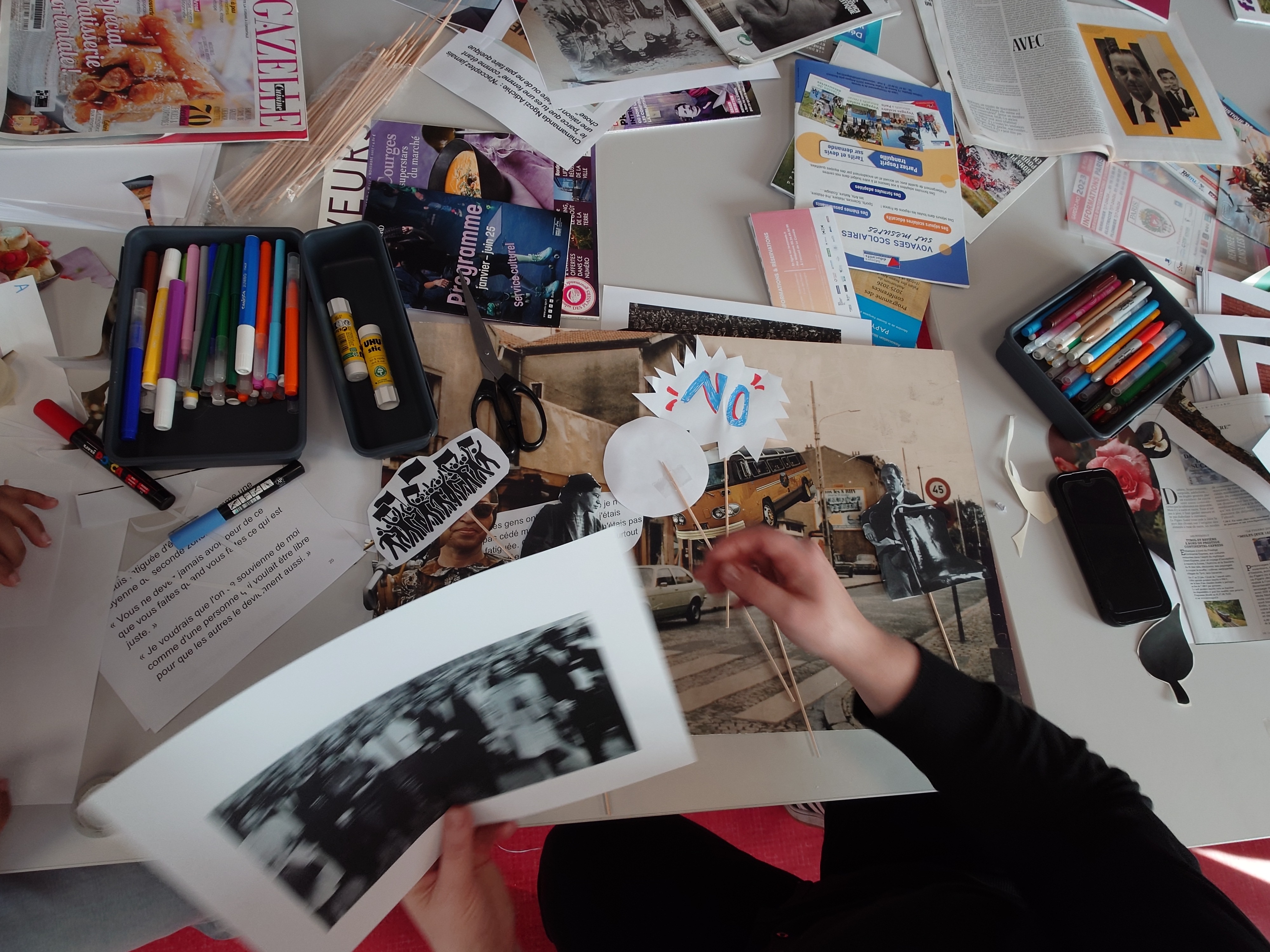
Publicly funded culture has become marginal in the face of digital practices. Rather than lamenting this, this article proposes to embrace that margin and turn it into the most vibrant space for our action.
We are marginals
Culture is people’s digital cultural practices. Publicly funded culture is marginal. We are marginals. I know this statement may shock in a sector that still thinks of itself as central, but it seems essential to me if we want to be clear-eyed about our place and, consequently, effective in our actions. As Jean-Luc Godard used to say, it is the margins that hold the page together. But we must first accept being in the margin, and understand that this margin, far from being a handicap, can become the most vibrant space for cultural creation and mediation.
The denial of marginality
There is a denial running through the professional cultural sector in France, and it strikes me every time I encounter it — in conferences, institutional meetings, the training sessions I lead, the projects I support. This denial consists of believing that culture is us. That culture is the subsidised theatres, the museums, the libraries, the festivals, the artist residencies, the funding committees for artistic creation. That the cultural sector financed by public money is where culture is made, preserved and transmitted.
This belief was true, or at least plausible, for a few decades. From Malraux to the 2000s, public cultural institutions did occupy a central place in French cultural life. Theatre directors, festival programmers, museum curators were figures of power, connected to political power, recognised as legitimate arbiters of taste and value. That is over.
Today, the dominant cultural practices are digital. They unfold on platforms, on social media, in video games, in podcasts, in the videos people make and share. They almost entirely escape traditional cultural institutions. The people who go to the theatre represent a tiny fraction of the population. The people who watch videos on their phones — that is almost everyone. And between these two realities, there is a chasm that the cultural sector refuses to see.
Pierre Bourdieu, in Distinction (1979), showed how cultural tastes function as social markers, instruments of classification that maintain hierarchies. What Bourdieu had not anticipated, but what his analytical framework helps us understand, is that the hierarchy itself has been reversed. It is no longer the holders of “legitimate cultural capital” who dominate the field. It is the digital platforms, with their algorithms, their business models, their billions of users. Legitimate cultural capital — that of the institutions — has not disappeared, but it has become marginal in terms of reach, audience and impact on people’s lives.
Minority does not mean minor
Gilles Deleuze and Félix Guattari, in Kafka: Toward a Minor Literature (1975), proposed an illuminating distinction between the major and the minor. The major is what dominates, what sets the norms, what establishes the standards. The minor is what diverts, what invents in the interstices, what makes the lines of power flee. But the minor is not the diminished. On the contrary: Deleuze and Guattari show that it is in the minor that true inventions, true creations occur, because the minor is freed from the obligation to represent and maintain order. Kafka writes in German in Prague, in a deterritorialised German, and it is this marginal position that gives his writing its singular power.
I believe the professional cultural sector is in exactly this position. It has become minor, in the Deleuzian sense. It is no longer the place where dominant culture is produced. It is the place from which practices can be invented that are not those of the dominant digital culture, that offer something else, that propose experiences the platforms do not. And it is precisely because it stands in this margin that it can be inventive. Were it still at the centre, it would be caught in the obligations of the centre: to reproduce, to maintain, to represent. In the margin, it is free to experiment.
The fertile margin: a concept for our condition
I propose to call fertile margin this new position of the cultural sector and, more broadly, of all mediation professionals, whether in cultural, educational or therapeutic work. The fertile margin is not the margin one suffers — the margin of relegation, underfunding, institutional contempt. It is the margin one chooses, cultivates, embraces as the place from which one can act with the greatest freedom and relevance.
The fertile margin differs from the suffered margin through a reversal of perspective. In the suffered margin, one laments having lost the centre. One demands resources, recognition, power. One says: give us back our place. In the fertile margin, one acknowledges the displacement and draws creative consequences from it. One says: since we are no longer at the centre, we no longer bear the obligations of the centre. We can invent forms that the centre cannot invent, because the centre must conform to mass expectations, audience metrics, the economic imperatives of the platforms.
Gilbert Simondon, in Individuation in the Light of the Notions of Form and Information (1958), proposes a concept that sheds light on this idea: transduction. Transduction is a process by which an activity propagates step by step through a domain, each stage of propagation serving as the principle for the next. It is not a diffusion from centre to periphery. It is a movement that constitutes itself as it goes, from its own intermediate results. The fertile margin works through transduction: it does not seek to radiate from a centre of power; it propagates, step by step, experiences that feed off one another. A workshop held here nourishes a reflection that nourishes another workshop held elsewhere, which produces unexpected results that nourish a new proposal. It is a living, adaptive process that depends not on a central power but on the quality of local connections.
What this changes for cultural mediation
Accepting one’s place in the fertile margin profoundly changes the mediation stance. If I think of myself as being at the centre, I have something to transmit: legitimate culture, knowledge, taste, competence. I am in the logic of cultural democratisation: bringing to people what they lack, elevating them towards what I consider true culture. This is the stance that Bourdieu described and dismantled: a posture of symbolic domination disguised as generosity.
If I think of myself as being in the margin, I do not have more culture than the people I work with. I have a different culture. And this different culture can enter into dialogue with theirs, in an exchange that enriches both sides. This is the logic of cultural democracy, as the Fribourg Declaration on Cultural Rights (2007) formulates it: every person is rich in their own culture, and the work of mediation consists of creating the conditions for these diverse riches to meet and cross-pollinate.
The people we work with — whether they are adolescents in care, people with disabilities, elderly people, or families in difficulty — already have a digital culture. They have practices with images, with social media, with video games, with artificial intelligences, that are often more developed, more refined, more inventive than professionals imagine. We do not arrive in a cultural desert. We arrive in a thriving cultural ecosystem whose codes we do not always understand, and that is normal.
Jacques Rancière, in The Ignorant Schoolmaster (1987), showed through the story of Joseph Jacotot that the most emancipatory teaching is one that starts from the principle that the student already possesses an intelligence equal to that of the teacher, and that the work of education consists not of transmitting knowledge but of creating the conditions for that intelligence to be exercised. What Rancière says about teaching, I deeply believe about mediation. We do not know better than the people we work with. We know differently. And it is this differently that has value, if it is offered as a dialogue rather than a correction.
What this changes for therapeutic mediation
The same reversal applies to the therapeutic field. Care professionals who believe they hold a monopoly on listening and psychological support must acknowledge that this monopoly no longer exists. People converse with artificial intelligences about their existential problems. They build complex identities on social media. They find online support communities that provide them with things the institution does not.
This observation is not an indictment of the quality of therapeutic work. It is an invitation to reposition it. How can we become complementary to what already exists in people’s lives? How can we articulate what we bring — clinical listening, a framework, an embodied relationship, transference — with what they find elsewhere: the permanent availability of the machine, the absence of judgement, the recognition of skills that the institution overlooks?
Félix Guattari, in The Three Ecologies (1989), proposed thinking together about environmental ecology, social ecology and mental ecology. Our mediation and care practices are embedded in an environment, an ecosystem, where embodied human relationships, machine-mediated relationships, relationships with artificial intelligences, and relationships with online communities all coexist. Taking this relational ecology seriously means accepting that our intervention does not take place in a vacuum, but in an environment already densely populated with practices, bonds and resources that people have built for themselves.
The margins that hold the page
Let me return to Godard’s quote, “It is the margins that hold the page”: without the margins, there is no page. There is only an unreadable block of text, with no breathing room, no space for the eye. Margins are not emptiness around fullness. They are the condition of possibility for the fullness to be legible.
Transposed to our field, this means that the cultural and therapeutic sector, as a margin, makes possible something that the dominant digital culture cannot produce by itself. Platforms produce flow, engagement, connection, audience. But they do not produce slowness, depth, embodied encounter, trust within a protected space. They do not produce those bubbles — as Serge Tisseron called them in relation to the “game of three figures” — those temporary spaces where the usual power dynamics are suspended and where something else can emerge.
That is our role as a margin. Not to transmit “real” culture to people who supposedly consume “fake” culture on their screens. Not to correct people’s digital habits. Not to lead them back to the righteous path of museum contemplation or silent reading. But to offer spaces that the platforms do not: spaces of shared creation, mutual listening, collective looking, self-discovery through the detour of art. Spaces where time is different, where attention is different, where the relationship is different.
Humility as strength
There is a virtue that the cultural sector does not much care for, and yet it seems to me to be the key to everything: humility. The humility to recognise that we are no longer at the centre. The humility to recognise that people’s cultural practices are not waiting for us. The humility to recognise that we have as much to learn from the people we work with as they have to learn from us.
This humility does not diminish our place in any way. It redefines it. We are no longer prescribers, arbiters of taste, guardians of the temple. We are proposers of experiences, creators of frameworks, artisans of encounters. Our legitimacy does not come from our institutional position. It comes from the quality of what we propose, the relevance of our frameworks, the sincerity of our listening. It is earned at every workshop, every encounter, every proposal. And it is lost just as quickly if we fall back into the arrogance of the expert who comes to bring the light.
Isabelle Stengers, philosopher of science, in Resisting the Disaster (2019), proposes thinking about practices not from the heights of theory but from the concrete, local, singular situation. Each situation calls for its own answers, its own inventions, its own compromises. There is no universal recipe for mediation, just as there is no universal recipe for culture. There are singular encounters between singular people in singular contexts, and everything else depends on the quality of those encounters.
Funding invention rather than power
All of this has political consequences. If the cultural sector is a margin, it must be funded as a margin — that is, as a place of experimentation, invention, production of new forms. It must not be funded as a centre of power — that is, as a place for reproducing the existing order, maintaining hierarchies, preserving acquired positions.
There are funding streams that serve to perpetuate the power of people who believe they hold cultural authority over the public. And there are funding streams that serve to support people who know they work in the margins of digital cultural hegemony, and who invent relevant, important, necessary actions within those margins. It is not the same funding, not the same criteria, not the same vision of what public culture should be.
It is absolutely essential to fund public culture. But on the condition that this funding serves the emancipation of people, not the maintenance of institutional power. Public culture must be defended not because it is at the centre, but precisely because it is in the margin, and because this margin is irreplaceable. Digital platforms will never produce what a shared creation workshop produces. The market will never fund encounters that generate no revenue but transform lives. It is the role of public funding to make possible what neither the market nor the platforms will make possible. But for this to have meaning, the people who are funded must be clear-eyed about their place, about their margin, about the modesty of their reach and the immensity of their responsibility.
The fertile margin is not a resignation. It is a programme. It is the choice to cultivate, in the interstices of digital cultural hegemony, spaces of freedom, creation and encounter that would not exist without us, and that people need — even if they do not always know it, even if they do not always come, even if we remain, by force of circumstance, marginals. Marginals who hold the page.

Cultural mediation, as I conceive and practice it, is not primarily a set of techniques, but an ethics of relationship. It consists of creating the conditions for a singular experience for each person, with respect for their dignity and cultural identity. This section brings together methods I have developed through my interventions, as well as reflections on the contemporary challenges of mediation.
These methods share a few common principles. They place the person, not the artwork or knowledge, at the center of the process. They recognize that receiving is creating, and that each participant generates their own experience. They are rooted in the perspective of cultural rights and cultural democracy, that is, in a horizontal rather than top-down logic.
In practice, these methods often rely on creation: making a film with one’s phone, animating a paper cutout image, writing collectively. Creation is not an end in itself, but a means of bringing about an authentic experience, of allowing each person to reveal themselves to themselves and to others. Constraints of time, format or technique are not obstacles but frameworks that liberate expression.
I share these methods here not as recipes to be applied, but as invitations to experiment. Each context, each group, each person calls for adaptation. What matters is the quality of the relationship one establishes, the space of trust one creates, the place one gives to the other. The reflective articles that accompany these methods aim to nourish this permanent attention to what is at stake in the encounter between people around art and culture.
-

The bond that sets us free
Toward an ethics of the bond in mediation and support work.
To emancipate those whom we accompany, and to emancipate ourselves in the same gesture: this, in my view, lies at the heart of any practice of (…) -

Letting Go of One’s Criteria
What the practitioner must agree to lose for mediation to work.
In the cultural and therapeutic mediation workshops I lead, the challenge is to create the conditions for people, often unsure of their own (…) -

Receiving, or the difficulty of doing nothing
The mediator’s invisible time and the energy of welcoming.
By the end of the day I am tired, with a physical tiredness, even though “I have done nothing,” because I have spent the day placing myself in a (…) -

Work and Mastery (2)
Distinguishing work from mastery in mediation-based creation.
Work (as a process by which people are transformed through doing) and mastery (as the illusion of control over what one produces) are two distinct (…) -

The process, not the result
What needs to be told for mediation to be understood.
An artist is brought in, and results are expected to match the professional who has been paid. This expectation threatens every mediation (…) -

The framework that authorizes
For a reflection on space, time, and institution in therapeutic mediation.
When we speak of a frame, we often think of what contains and what forbids. This understanding is partial. In the analytic cure as in mediation (…) -

What the gaze of others does to our images
Reflections on symbolization, identity, and the unconscious in photography-based mediation.
When I invite a group of people to each take a photograph and then look at them together, with the rule that the author cannot speak while the (…) -

The Image as Evidence
What Machines Do to Us.
When an image is born of a machine, it attests. This property, which distinguishes photography from drawing and cinema from theatre, gives (…) -

Building, Not Valorizing
What the collective gaze does that valorization cannot.
In supported creation workshops, whether they fall within cultural action, arts education, or therapeutic mediation, people often speak of (…) -

Place as an Operative Concept for an Emancipatory Cultural Mediation
Taking one’s place is not about occupying a position, it’s about being able to move.
“What place for young people?” The question is wrongly framed. Place is not a position to occupy, it is the capacity to move within a relational (…) -

The Selfie, the Filter, and the Two Bodies
The image of self as therapeutic working material.
A young woman retouches her ID photo using artificial intelligence. The educator accompanying her tells her: “That’s not you. You’re already very (…) -

The object that disposes
What machines change in mediation.
When we choose a tool for mediation, we choose a device of relationships. The technical object carries within it a history, a politics, ways of (…) -

Trust as a Technical Act
How Inner Work and the Choice of Objects Build the Conditions for Emancipation.
The trust that a mediator gives to participants is something that gets built. It requires inner work on one’s own fears and a patient choice of (…) -

Not judging people’s digital practices
Non-judgment and non-hierarchization as conditions for mediation.
Judgment damages the very connection that mediation seeks to build. It goes hand in hand with a more subtle hierarchization, which places the (…) -

The Eye in the Hand
Why the same tool produces a radically different experience depending on the frame you give it.
We all have a camera in our pocket. We use it dozens of times a day, without thinking, for countless purposes. It has become so much a part of us (…) -

The contemporary functions of images: beyond memory
Towards an anthropology of image-as-speech and its consequences for mediation.
We think we know what an image is. We think it is a trace, a memory, a proof. But images have changed function without our fully realising it. For (…) -

Artificial Intelligence, a Tool for Emancipation in Mediation
How conversational AI is opening up new possibilities for cultural and therapeutic mediation.
Since I began using conversational artificial intelligence in the context of cultural and therapeutic mediation in 2023, I have observed effects I (…) -

The Fertile Margin
Reframe cultural and therapeutic practices within the current reality, where digital culture has become the dominant culture.
Publicly funded culture has become marginal in the face of digital practices. Rather than lamenting this, this article proposes to embrace that (…) -

Audiovisual Workshop in Therapeutic Mediation
Elements of a Course in the University Diploma in Arts and Therapeutic Mediations (Paris 7 – Université Paris Cité
How ordinary audiovisual tools — the phone, the camera — become therapeutic mediators: an account and analysis of a pedagogical practice in (…) -

Vision is a reconstruction
What the eye does not see, and why it changes everything about our relationship to images.
We believe we see the world as it is. We believe our eyes capture an objective image of what lies before us, the way a camera would capture a (…) -

Creation as the energy source of cultural mediation
Moving beyond hierarchies to unleash the power of making together.
Cultural mediation is going through deep questioning about its professional identity. Beyond the legitimate claims for status recognition, I wish (…) -

Creating with people
Methods of cultural mediation for shared creation.
This text brings together the principles that underpin my approach to cultural mediation. They are not rules. They are reference points, shaped by (…) -

Engagement in Time
What matters in cultural mediation is not the duration of actions, but the quality of shared time.
The duration of cultural actions is often considered a guarantee of quality. I defend here a different approach: what transforms people lies in (…) -

Definition of Cultural Mediation
An ethics of relationship in service of singular experience.
Cultural mediation is often reduced to a set of transmission techniques. Here I propose a definition that places the person at the center: an (…)


-

On the Fragility of Corporatism When the defense of cultural privileges masquerades as freedom of expression.
The recent condemnation of the Auvergne-Rhône-Alpes region has aroused enthusiasm among performing arts professionals. Yet, this provisional legal (…) -

Making Room for Adolescents: Rethinking Our Approaches in Cultural Action From democratisation to cultural democracy.
Cultural action and mediation with adolescents challenge the foundations of our practices: between framework and transgression, between physical (…) -
Definition of Cultural Mediation An ethics of relationship in service of singular experience.
Cultural mediation is often reduced to a set of transmission techniques. Here I propose a definition that places the person at the center: an (…) -

Professional meeting “Public participation”: presentation by Benoît Labourdette Interview of Benoît Labourdette by Jean-Yves de Lépinay (11’37s, 2020).
Sharing examples of audiovisual creation workshops conducted in the spirit of cultural rights: moving from “participation” to “interaction.” (…) -

The marginality of cultural institutions Lucidity of a paradigm shift.
Traditional cultural institutions, once central, have become marginal in the face of digital practices that now dominate citizens’ attention. This (…)
