For contemplative cinema
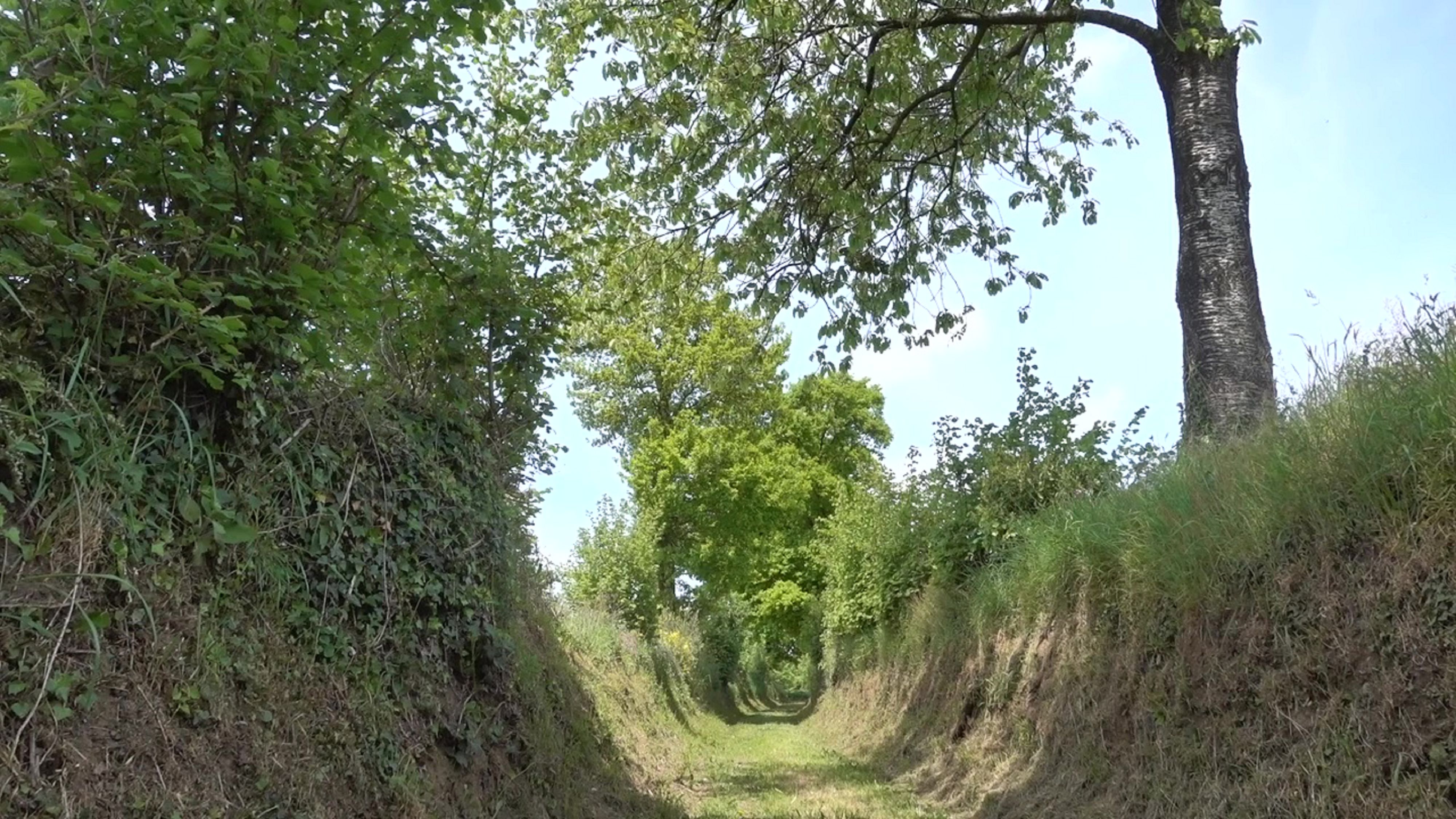
What is cinema? This question, posed by André Bazin in the 1950s, is, in my view, a very important one. Cinema, like any other art form, always deserves to have its foundations questioned. At the time, André Bazin defined cinema in terms of several philosophical facets: cinema’s relationship to death, evidence, religion and ethics (“forbidden editing” in his words, for example). There was no cinema-television dialectic, and even less no cinema-video dialectic, as we experience it today, at a time of democratization of audiovisual production and distribution tools.
Cinema is certainly not defined as such because it is first and foremost shown “in cinemas”; this vision is reductive because it is exclusively corporatist. For me, “cinema” is an audiovisual object that is an artistic project, the “proposition of a world” (as Jean-Claude Collot used to say). Cinematographic works can be seen in cinemas, in museums, on the Internet in its various spaces, in a theater, on the street, on a telephone... and they can be made in teams, with various budgets, as well as individually. There is no hierarchy based on technique or budget.
What is “contemplative cinema”, and what does it mean?
First of all, we need to distinguish between narrative and non-narrative films. Non-narrative films are often classified as “experimental cinema”. It’s more complicated than that. Here, I’d like to talk about “contemplative non-narrative cinema” projects, i.e. those that don’t tell a story in the traditional sense of the term. The films made as part of « Jardin céleste » fall into this category.
I fully understood the meaning of non-narrative contemplative films when I collaborated with Art dans la cité (Rachel Even) to create films to be shown on the ceilings of hospital rooms, for the well-being of patients and to help improve their health. With Art dans la cité, I’ve also transformed a hospital waiting room into a cinema, showing contemplative nature films; the impact on patients’ relaxation is significant. These films are objects with an artistic intention, whose role is to provide a sensory experience (with images and sound) for their viewers, and to do so in a pure manner, without the artifice of a story to tell.
Of course, these films don’t have the same kind of distribution space as films that tell stories. They can be compared to animated paintings, in front of which you spend as much time as you like, and to which you can return. For example, many of the audiovisual works shown in museums are contemplative, non-narrative films.
I think these films are a great way to create, because they offer this very pure experience. In a way, they’re films for “unhooking” from the taut narrative thread that structures our lives and our media consumption. The absence of dramaturgy has, I believe, the virtue of soothing. It’s true that in classical storytelling, catharsis is also a way of “emptying one’s emotions” on a story other than one’s own, to make peace. Contemplative non-narrative films are therefore one way of sowing peace within oneself, according to place, time and desire. They have their place in my definition of “cinema”.
The way these films are made echoes what they will propose to their future viewers. They invite us to work differently, to listen to ourselves, the world and others - in short, to develop a new ecology of relationships. In my practice, I often use the sequence shot (advocated in his time by André Bazin), which allows cinema to become a kind of sensitive transmission belt to bring the magic of the world’s natural movement into our busy minds.

The image has become a language that everyone “speaks” on a daily basis, much more so than before the democratization of digital tools. Thus the stakes of images touch more than ever our existence in a very direct way, at the psychological, sociological, political, artistic levels... It seems essential to me not to avoid critical thinking about images, their technologies and uses. To think, there is nothing like experimenting, searching, conceptualizing, sharing. I share here resources, projects and experiences around images, which I hope will be useful, in the fields of education, art, philosophy...
-

The Selfie, the Filter, and the Two Bodies
The image of self as therapeutic working material.
A young woman retouches her ID photo using artificial intelligence. The educator accompanying her tells her: “That’s not you. You’re already very (…) -

The object that disposes
What machines change in mediation.
When we choose a tool for mediation, we choose a device of relationships. The technical object carries within it a history, a politics, ways of (…) -

The contemporary functions of images: beyond memory
Towards an anthropology of image-as-speech and its consequences for mediation.
We think we know what an image is. We think it is a trace, a memory, a proof. But images have changed function without our fully realising it. For (…) -

Vision is a reconstruction
What the eye does not see, and why it changes everything about our relationship to images.
We believe we see the world as it is. We believe our eyes capture an objective image of what lies before us, the way a camera would capture a (…) -

Image education as a space for connection
Trusting how people see to restore dialogue.
On March 16, 2026, during the National Meeting of Regional Image Education Centres, organised by Normandie Images in Rouen, I took part in a round (…) -

The Reality and Fiction of Images
How our perceptions navigate between memorial reconstruction and multiple image regimes.
Images perpetually oscillate between real and imaginary. This porous border reveals less a confusion than a fundamental characteristic of our (…) -

Cinema and artificial intelligence, two innovations looking at each other
Reflections on technological upheavals and their creative echoes.
Cinema and artificial intelligence share a similar trajectory: disruptive innovations first decried, then becoming transformative industries of (…) -

The Accelerated Eye
Manifesto for a new ecology of the gaze.
What if speed were not the enemy of culture, but the instrument of a new form of sensitive intelligence? A radical reappropriation of our right to (…) -

The Selfie, Mirror of Narcissus?
A Plea for Redefining Our Relationship to Images.
The omnipresence of the selfie raises questions: is it a sign of a narcissistic era? I argue, on the contrary, that this gesture, poorly (…) -

The mobile phone as a tool for cinematic creation
Revolutionizing practices and perspectives.
In twenty years, the mobile phone has revolutionized cinematic creation: as a tool always within reach, it enables the filming of the unexpected, (…) -

About the “new” images
A critical reflection on technological innovation and real cultural transformation.
Between ephemeral fashion effects and genuine artistic revolutions, “new images” often reveal more about our relationship to the present than to (…) -

The cinephilia of excerpts
Legitimizing new “impure” practices.
Traditional cinephilia venerates the complete work, but the internet has given rise to a new form: cinephilia of the excerpt. Enthusiasts now (…) -

For a photographic ecology
A method of opening up to oneself through images.
Photographic ecology proposes using the image as a method of opening oneself up. Not photographing less, but exploring differently: photographing (…) -

Cinema and death
To redefine cinema as an intrinsically diverse phenomenon.
Cinema, as a mechanical recording device, shares a unique relationship with death. This connection redefines the cinematic experience, which is (…) -

Artificial intelligence is an opportunity for free and experimental cinema
AI offers humanity the opportunity to reclaim its place.
Artificial intelligence is a threat to the professional academic sector that produces blockbusters and other commercially driven films, and an (…) -

The difference between image and sound from a neurological point of view
A tool for audiovisual creation.
Images and sounds exist through our perception. The eye and ear transform light and pressure into electrical signals, interpreted by the brain. (…) -

La réinvention de la séance collective de cinéma sur TikTok
Renaissance spontanée du partage de l’art comme humanisme.
Contrairement à l’idée que les réseaux sociaux isolent, ils réinventent des moments de partage collectif, comme la séance de cinéma. Sur TikTok, (…) -

For contemplative cinema
Theoretical opening of the definition of cinema
What is cinema? This question, posed by André Bazin in the 1950s, is, in my view, a very important one. Cinema, like any other art form, always (…) -

Bellapoarch, or the Mona Lisa of the 21st Century?
Analysis of a success.
A 10-second video posted on the social network TikTok on August 18, 2020 has made, one month later, more than 400 million views, and the highest (…) -

Vertical films
Reflection and starting point for experiments.
Moving images are verticalizing. This is far from being anecdotal and has an impact on our representation of the world. What philosophical changes (…) -

Audiovisual workshops to combat gender stereotypes
Methods for audiovisual creativity.
Thought-provoking ideas and proposals for audiovisual workshop concepts for nuanced and useful actions, with the aim of building critical thinking (…) -

Drawing on architecture
The projected image is an extremely rich track to animate architecture, private or public space, the theatre stage. I have been experimenting with (…) -

Pocketfilms-Empathy
Project to support psychosocial and pedagogical practices around the empathy clinic and using images. By Serge Tisseron and Benoît Labourdette, (…) -

Research-action “Image Education 2.1”
Collaborative action-research project led by Benoît Labourdette production in 2018 and 2019, to develop the synergy between teenage cinema (…) -

The singularity, a collaborative transmedia artistic project
“The singularity” is a collaborative transmedia project, launched in 2016 by Benoît Labourdette. Around a thematic spine, over a long period of (…) -

Ciné Lab # 6: “New usages, digital cultures. What (R) evolution for cinemas?”
Day of reflection and common development of innovative projects, for cinema operators and mediators.The ACRIRA and the GRAC (Rhône Alpes (…) -

Smugglers images national metting 2016 : pico-projection workshop
As part of smugglers national meetings of images 2016 November 19, 2016, I proposed a “pico-projection workshop”, experiences shared with (…) -

Spirit Journal : article “Lives in Pictures”
I published the article “Lives in Pictures” in the June 2016 issue of the Spirit Journal on the theme “Power of Images”. Issue edited by Carole (…) -

Tell me LED
Creative residency at the Maison Populaire de Montreuil: participatory creation and feature film. Creative residency at the Maison Populaire de (…) -

Book: “Image education 2.0”
Practical guide (free download).
“Image education 2.0” (under the direction of Benoît Labourdette), practical book of image education in the digital age, published by ACAP. Free (…) -

Ministry of Culture (France) : National Consultation on Arts and Cultural Education
The Ministry of Culture and Communication (France) launched in November 2012 a “National Consultation on Arts Education” to “enable all young (…)


-

Roger Odin Musique instrumentale, 2023, par Benoît Labourdette (2’32s).
Un morceau au souffle fragile, que je joue pour te rendre hommage, ami qui vient de partir. -

The drone, a creative tool Article published in Théorème 29: “Mobiles: artistic and aesthetic issues” (2016).
How can a drone be a tool of cinematographic creation at the service of an artistic and political project, and no longer be considered as a (…) -

Wet leaves Calligrams
-

“On the beach of my imagination” : video installation in the hospital Immersive device: permanent video installation at the Jacques Monod Hospital in Flers (Normandy - 2022).
Accounts of the issues at work in an art for health project. Every morning, the big wall of the waiting room of the hospital in Flers lights up by (…) -

Short bio & filmo Benoît Labourdette
Benoît Labourdette is a filmmaker, educator, researcher, essayist and consultant in cultural innovation and digital strategies. He is also a (…)
