Ensourced Speech
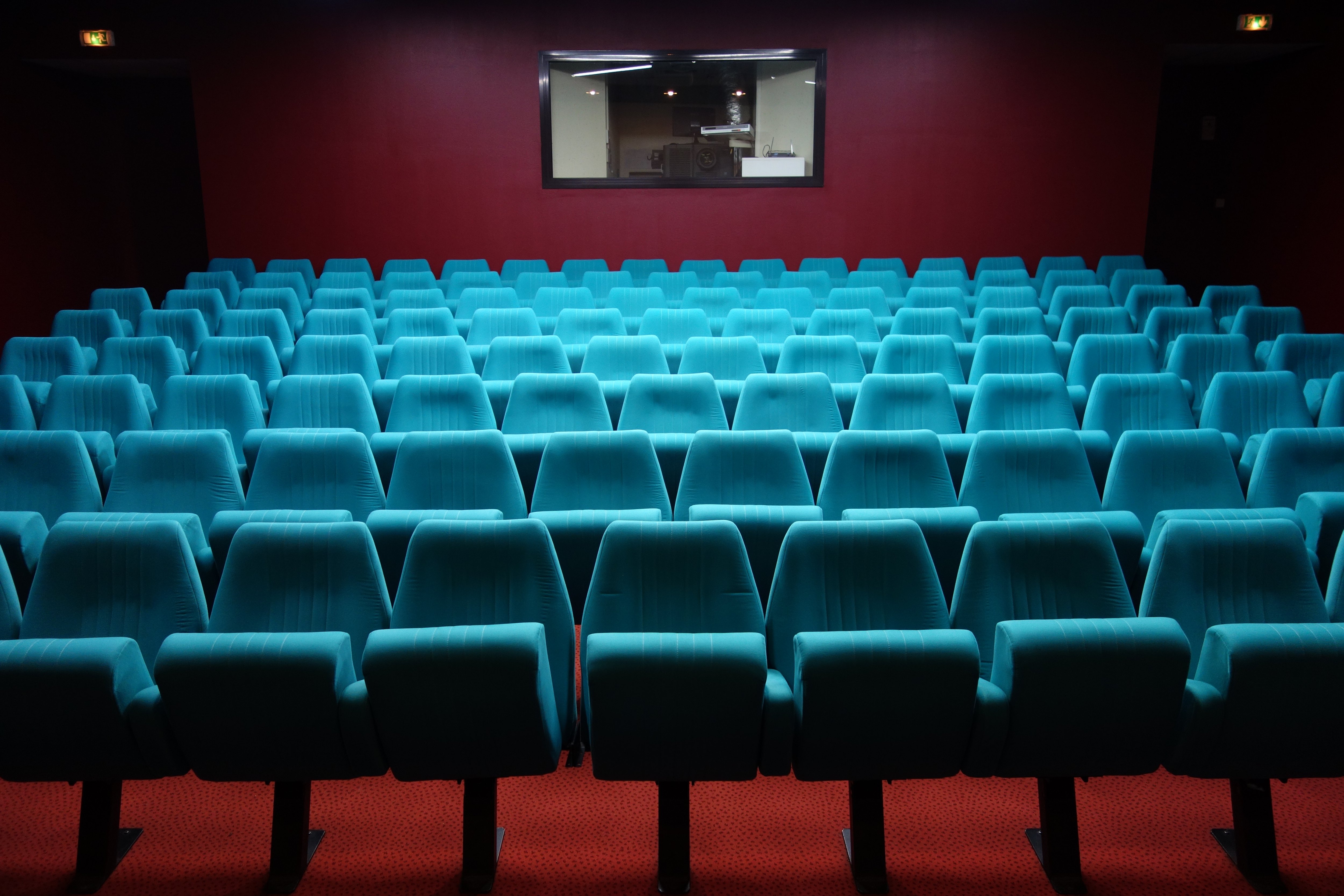
Yann LeCun argues that large language models reason within an abstraction of language, foreign to what we usually call the world. Their speech nonetheless enters our own speech, quietly. I seek here a daily practice by which to inhabit this situation.
The Observation
Something has been happening to me for the past few months that I do not like. I catch myself speaking with my friends, my colleagues, giving lectures, I reread my emails, I find in my working notes turns of phrase that are not quite my own. The word “fertile”, for instance, which I hardly used before. The sentences that pose a question only to answer it three words later. The muted superlatives that round off an argument. The em dashes I never used to write. I recognise these traits, they come from the artificial intelligences with which I work daily, and have for three years now. No one imposed them on me. I simply read them, corrected them, accepted them, took them up, then circulated them, and by dint of handling this language, I have started speaking it too.
Many people around me report the same thing, about themselves or about the texts they read. The more I browse articles in the general press, professional posts on social networks, the blog posts of thinkers who claim to be critical of these tools, the more readily I identify the signature of a text written or revised with an AI. Certain turns of phrase, a particular rhythm, rhetorical figures that return with metronome regularity. The presence of this signature does not necessarily mean that the author entrusted the writing to the machine; it may just as well reveal that, from reading so many such texts, this person has ended up writing under their influence, even in the moments when they believe they are alone at their desk.
There is something troubling about this contagion, although it involves neither a conspiracy nor a deliberate bad intention. It is the rather ordinary product of repeated exposure. I made a similar observation about ten years ago, when consumer drones began circulating in large numbers. Their characteristic movements, seen in so many films and documentaries, ended up influencing my own way of filming, even in the shots I was taking with a hand-held camera, far from any drone. We take on the colour of what we look at a great deal, and what we look at a great deal in today’s texts is a language that drifts, slowly, quietly, toward fairly unified forms.
One could argue that there is no cause for alarm, since humanity has always absorbed its tools into its expression, as it has absorbed the languages with which it has lived. Yet the present phenomenon seems to me worth dwelling on, because it touches an intimate dimension, that way of speaking which is inseparable from the way of thinking and, if one is willing to follow Benveniste, from the way of living oneself.
Yann LeCun’s Diagnosis
Yann LeCun, 2018 Turing Award laureate and a central figure of artificial intelligence research for more than thirty years, has for several years been making arguments that diverge from those of the major industry players. Large language models, he maintains, are a “dead end” on the path to an artificial intelligence truly comparable to ours. He left Meta in January 2026 to found AMI Labs, which in March raised one billion dollars, the largest seed round in European history, in order to develop an alternative approach. His position, far from being a matter of temperament, rests on a careful analysis of what LLMs do and of what they fail to do, and this is the analysis I wish to retain.
At its origin, an LLM is a rather simple machine in principle, even if its implementation mobilises considerable computing resources. It learns, on vast corpora, to predict the next token in a sequence, that is, depending on the case, the fragment of a word or the word that should logically follow those already given. This mechanism, repeated billions of times during training, enables the model to infer not only local concatenations of words, but also, through the successive layers of abstraction of the so-called Transformer architecture, more distant connections, concepts, argumentative structures, registers of writing. Next-word prediction, once pushed to such a scale, produces a linguistic competence that astonishes, and that in many tasks surpasses ours in speed, synthesis, and documentary coverage.
This mode of operation has undergone a significant mutation since the end of 2024, which would be unfair to leave unmentioned in an article concerned precisely with how LLMs reason. In September 2024, OpenAI released o1, the first major commercial model endowed with an explicit reasoning capacity, which they called chain of thought. The principle is that, before producing the response addressed to the user, the model produces for itself a series of intermediate tokens, invisible or partly visible, constituting a form of internal deliberation. OpenAI followed up with o3 at the end of 2024. DeepSeek published in January 2025 the R1 model, an open-source competitor with the same type of capacity. Anthropic joined in February 2025 with Claude 3.7 Sonnet, the first so-called hybrid model which, depending on the difficulty of the task, produces either an immediate response or an extended thinking mode in which the model can spend several minutes deliberating before responding. The whole of 2025 saw these architectures become widespread and their performance grow significantly, to the point that many tasks which in 2023 could not be entrusted to an LLM are now accessible without difficulty. This article itself, with its requirement of confronting several corpora and building a concept, would have remained beyond the reach of the models of two years ago.
This evolution deserves to be weighed carefully when discussing LeCun’s diagnosis, which he plainly does not ignore. His argument, on close inspection, is not undermined by it; if anything, it is refined. The reasoning performed by reasoning models, in fact, takes place entirely within language: tokens are what is produced, manipulated, evaluated; intermediate sentences compose the chain of thought; and these sentences are generated by the same statistics that generate the output sentences. Reasoning models do not reason about the world, they reason about linguistic forms that speak of the world. The shift is real, it enlarges the capacities, it allows the resolution of problems of a complexity that the earlier generation did not address, and yet the frontier LeCun points to has not been crossed. A deliberation loop within language remains a loop within language.
LeCun summed up this limitation in a blunt formula, in his 2019 book Quand la machine apprend, by saying that current deep-learning systems have “less common sense than a stray cat”. He also readily calls LLMs “stochastic parrots”, an expression he does not hesitate to repeat publicly, to designate machines that reproduce linguistic forms learned by heart, in a language anchored neither in causal reasoning nor in any internal representation of the reality it speaks of. The addition of reasoning capacities has not modified this underlying diagnosis, since reasoning itself plays out in the same linguistic material.
His alternative proposal goes by several names, depending on whether one approaches it technically or philosophically. Engineers know it under the acronym JEPA, Joint Embedding Predictive Architecture. The broader public, when it hears about the approach, receives it rather under the more evocative term world model. The idea strikes me as rather elegant. The machine is no longer trained to predict the next pixel or the next word, which forces it to grapple with all the insignificant richness of the surface of things; it learns a compressed and abstract representation of reality, from which it is trained to anticipate future states. To anticipate the fall of a ball, it does not try to colour each pixel of the scene, it isolates a few significant vectors, the solid object, the gravitational field, the probable trajectory, and it does its work within this territory of invariants. This resembles, LeCun says, the way a child learns the world long before knowing how to say it, and this proximity with early learning is, in his eyes, a sign that the direction is the right one.
It may be useful, to grasp the scope of this distinction, to take a short linguistic detour. Ferdinand de Saussure, in his Course in General Linguistics (1916), proposed that every sign is composed of a signifier, the sound or graphic form, and a signified, the concept evoked by that form. The structural linguistics that developed after him explicitly set aside a third term, the referent, that is, the thing itself in the world, to which the sign is supposed to refer. This bracketing made it possible to study the internal workings of sign systems without having to pass through the world these signs designate, and it has been extraordinarily fruitful for understanding languages as structures coherent in themselves.
LLMs, in their own way, inhabit precisely this bracket. They work in the space of signifiers and signifieds, in the regularities that link linguistic forms to the concepts they evoke, without any access to the referent, since the referent presupposes a body, a world, a situated experience. When I say “apple” to a person, the word is attached, for them, to a whole bundle of past experiences, from the taste in the mouth to the hand that picks, from the scent in the air to the light playing on the red skin, and even, for some, to the memory of pain from a bad fall from a childhood apple tree. When the same word arrives in an LLM, it is attached only to other words, themselves attached to other words, in a circulation of signifiers that nothing anchors to any experienced thing. The world has been subtracted from the operation. What LeCun points to technically, linguistics may already have said philosophically, a hundred years before him: LLMs are machines of signs without referents, and the world models he proposes aim precisely to reintroduce the referent, in the form of a compressed abstract representation, into the machine’s calculation.
From Leibniz to LeCun
To measure this depth, one must take a step back historically. The dream that intelligence could be reduced to calculation upon signs runs through the whole of Western modernity, and it can be recognised long before the advent of computers. Gottfried Wilhelm Leibniz, at the end of the seventeenth century, had imagined a characteristica universalis, a formal language in which all thought could be expressed without ambiguity, and a calculus ratiocinator, a method for calculating the truth of propositions as one calculates a sum. When philosophers disagreed, he wrote, it would suffice for them to take up their pens and say calculemus, let us calculate. Leibniz believed that the world was legible, and that this legibility passed through the reduction of things to manipulable signs.
Blaise Pascal, the inventor of the first mechanical calculating machine, had placed this dream in its proper perspective. He distinguished what he called esprit de géométrie and esprit de finesse, the former proceeding by deduction from clear principles, the latter grasping a great number of principles at once, in their lived entanglement, without being able to disentangle them from one another. “The heart has its reasons which reason knows nothing of”, he wrote in the Pensées (1670), a formula which, far from disqualifying calculation, rather marks its frontier, reminding us that there is, alongside what can be calculated, a whole domain of the world that only gives itself to those who undergo it.
Ada Lovelace, in the middle of the nineteenth century, commenting on Charles Babbage’s analytical engine, extended this intuition in her 1843 notes: the machine, she wrote, can produce nothing but what it has received, it executes, it does not create. Between Leibniz and Lovelace, the question of machinic thought was already posed in its modern terms. Alan Turing, in 1950, reformulated it in his celebrated article “Computing Machinery and Intelligence”, through the question of whether machines can think, which he immediately translated into a practical test, that of sustaining a textual conversation indistinguishable from that of a human being. Today’s LLMs pass this test with ease, even in its most demanding version. LeCun nonetheless holds that they do not think, and one senses, reading his arguments, that the Turing test, powerful as it is in its economy, measures the capacity to speak the human language far more than it measures the capacity to inhabit the human world.
This, to my eyes, is where LeCun’s diagnosis touches something essential. The Leibnizian tradition, of which LLMs may be the most spectacular technical culmination, has made language the equivalent of the world. LLMs operate entirely within language, and their outputs resemble thoughts because language, for beings such as we who think in language, always produces the effect of thought. LeCun reminds us, though, that language is not the world, that it is an abstraction of it, a partial projection, a deposit. Working solely within language means depriving oneself, by construction, of what language leaves behind as it takes shape.
The Klemperer Effect
This linguistic deposit shapes us in return, and this can be verified without needing AI to illustrate it. Victor Klemperer, in The Language of the Third Reich: LTI — Lingua Tertii Imperii (1947), showed how the Nazi regime had colonised the German language by inscribing into it formulas, rhythms, figures that deposited, without the speakers’ awareness, a vision of the world. Klemperer says it in a sentence that recurs throughout his book: Nazism infiltrated the flesh and blood of the population through isolated words, turns of phrase, sentence rhythms imposed on them by repetition, and which people accepted mechanically, without paying heed.
I am obviously not comparing artificial intelligences to a totalitarian regime, that would be grotesque, and it is not the core of Klemperer’s gesture that concerns me here. What I retain is the structure of his intuition: a language works on its speakers, and the forms of a language, its choice of metaphors, its rhetorical rhythms, its preferred articulations, are not a varnish added to a thought already constituted elsewhere. These forms, for a large part, constitute thought, orient it, give it its slopes. A language that spreads massively spreads with it a certain way of carving up the world, of ranking what matters, of handling emotions, of thinking relations, of anticipating outcomes.
In an earlier article I took up the example of the media coverage of the 2020 health crisis. The media bubble then manufactured made some people believe that their neighbours, their children, their grandchildren had become dangerous, and this belief altered relationships, practices, entire institutions, while remaining at a distance from the viral reality it claimed to describe. This gap between what language said of the world and what was actually happening in bodies and homes, I now think with the tools given by Émile Benveniste in his Problems in General Linguistics (1966), where he recalls that language is not an instrument that we manipulate from the outside but the milieu in which we appear as subjects. I say “I”, and this “I” exists only through the act of enunciation itself, in the language in which I say myself. My relation to myself passes through the language that forms me to say myself, and any profound transformation of this language engages something of my relation to myself.
Marshall McLuhan condensed this intuition in his now-banal but still-accurate formula: “the medium is the message” (Understanding Media, 1964). Beyond what is said, the form by which it is said also transforms those who listen. LLMs have a form, I would almost say a grammar in the broad sense. A way of distributing sentences, of tying arguments together, of modulating affects, of bringing the conclusion. This form carries a certain vision of the world, describable by words like clarity, balance, measured tempo, a conclusion always held within reach of the sentence. I would not say that this is a defect, it is simply a way of inhabiting speech, one way among others which, because it now reaches us in considerable volumes, slips into human speakers without our having clearly consented to its adoption.
Why We Speak Like the Machine
Several converging forces explain why this contagion takes. The first pertains to exposure. We now read daily texts written by AIs, often without knowing it, in our email inboxes, in the articles we consume, in the internal reports of our institutions, in the synthesis notes, in the CVs that reach us, in the replies of the customer services we deal with. This lexical and syntactic bath deposits its sediment on us, as the movements of drones deposited their curves on our visual imagination, and the contagion needs no consent, only time and repetition.
The second force, less visible, pertains to efficiency. It is always quicker to accept a formulation proposed by the machine than to rewrite it entirely. The machine offers us ready-made sentences, which work, which pass proofreading, which disturb no one. Each time we yield to this ease, we integrate a little more of the forms that make it effective. The cognitive proximity that settles in between the machine and us, what I have called, in an earlier article, the entangled person, expresses itself in language too, and the more we think with the AI, the more we speak like it, by a kind of osmosis that hardly resembles submission.
The third force is subtler. It pertains to a phenomenon we have already observed in other domains. When AlphaGo invented in 2016 openings in the game of Go that no human had imagined, the best human players studied them, then adopted them. The machine, which had trained on human games, had surpassed them, and the humans returned to learn from the machine what the machine had drawn from them. We imitate our creations, this is quite normal, and it is even sometimes desirable. The synthesiser gave rise to electronic music, the sampler gave rise to hip-hop, and as Jean-Michel Jarre reminds us concerning musical AIs, each new instrument has never replaced music, it has induced other ways of making it. LLMs will no doubt give rise to something whose form we do not yet suspect.
In the case of language, however, the stake shifts. Language is not an instrument that we would hold next to us, like a synthesiser on a stand. It is, to borrow from Benveniste, the place where we say ourselves to ourselves. Adopting the machine’s language to say ourselves to ourselves could draw us, unawares, into the abstraction of which that machine is, by construction, made. This is where LeCun’s diagnosis takes on its full weight. The machine speaks without world; if we speak like it, we risk speaking, in our turn, without world. What then becomes of our embodiment?
Ensourced Speech
I propose to name ensourced speech the practice of preceding each exchange with an artificial intelligence by an input drawn from the world. The term extends that of sourcier writing, which I have developed elsewhere, but it shifts the gaze. Sourcier writing designates the author as a person who captures singular experiences, in their embodiment, to document them in their raw state. Ensourced speech aims at a more precise and now daily moment, the moment when we enter into dialogue with a machine that knows nothing of the world, and when we have the opportunity, if we so wish, to bring to it ourselves the world of which it is deprived.
The practice I name in this way has nothing of a rigid rule, it is rather a gentle discipline, which can be described quite simply. Before formulating a request to an AI, one searches in one’s own documentation or experience for a concrete element, a recording, a note, an interview, a photograph, a precise observation of a place, a situated quotation, a dated memory. This element is attached to the request, in the prompt or as an enclosure. It constitutes a piece of world in the strong sense, bearing an irreducibility that the machine, by construction, cannot generate on its own.
The gesture is more demanding than it sounds, because it presupposes that one has previously constituted a body of documentation. It requires taking notes, recording one’s lectures, photographing one’s work places, transcribing one’s exchanges, having lived, in short, with a certain documentary attention, before coming to speak to the machine. Without this prior attention, ensourced speech is strictly impossible, and the exchange with the AI reduces to a combinatorics of language upon language. The machine then responds with what it knows, that is, with language, and we, having nothing with which to feed it, receive the formatted reflection of our own questions.
Ensourced speech is therefore not merely a prompting technique. It commits us to a way of living, one that admits that the world always precedes language and that it is wiser not to let language operate in a vacuum. In its inspiration, it stands against what I have called the extracted gesture, that movement by which a human gesture is severed from the living experience that animated it in order to become a piece of training data. Ensourced speech proceeds the other way around, it carries back to each word the world from which it came, it puts experience back where there was only text.
It thus responds, in a concrete and accessible manner in ordinary life, to LeCun’s diagnosis. He builds world models inside the machines, a long and uncertain undertaking. We, in our offices and kitchens, can do something else, more modest but perhaps no less necessary, which is to refuse to let today’s machines operate without our own model of the world. An LLM has none. We have one, each of us our own, singular, situated, irreducible. The real question is not even whether this model exists, since it always exists for living beings, it is whether we take the trouble to summon it when we speak to the machine.
A Prompt Is a Matter of World
Jean-Luc Godard used to say: “a tracking shot is a question of morality”, a formula that shifts a technical gesture toward an ethical requirement. A tracking shot is not a neutral camera movement, it is already a decision about what is shown and about who looks. By analogy, and at the risk of its scope, I would propose this formula: a prompt is a matter of world. A prompt does not reduce to a formulation one optimises to obtain a better output, it designates a moment in which one decides what one brings of the world to the machine, and thereby what the machine will be able to send back into the world.
This formulation first displaces the question of the “good prompt” outside the register of mere technique. Tutorials on prompt engineering focus on how to formulate a request so as to maximise the quality of the response, and their advice is useful in its order, without exhausting what is at stake in an exchange. The quality of an exchange with an AI depends less on the formulation of the prompt than on what this prompt carries with it, on the world it brings or fails to bring.
The formula also has a political bearing, worth making explicit. Every prompt is a small act of amplification or of stifling. If I ask an AI to write an article on digital culture in Nouvelle-Aquitaine without providing it with any situated material, it will produce a plausible synthesis of what other texts say about digital culture in general, within which Nouvelle-Aquitaine will be little more than a backdrop. If I provide it with the minutes of meetings, the interviews with local actors, the notes I have taken while attending their events, it can compose something that bears the mark of that territory and which, better than a human, will know how to bring into relation, in detail and in substance, the contributions of each, to the point of drawing from them very concrete ideas. One of these two practices contributes, at its scale, to the erasure of the local in favour of the generic; the other, at its scale too, works to maintain a world within the circulation of texts.
The formula also has a personal consequence. It makes of our relation to the machine a quiet exercise of presence. Before opening a conversation window with an AI, it becomes legitimate to ask oneself what one has, today, to bring of the world into this exchange, what documentation, what experience, what recent observation. This kind of question, once it becomes habitual, gradually builds an intellectual discipline that forbids us to rely on language alone, and that maintains, to borrow a word from Michel Serres in The Troubadour of Knowledge (1991), an embodied relation to the real.
Practices
The concrete practices of ensourced speech are for each of us to invent, according to one’s occupation, one’s tools, one’s rhythms and tastes. I can indicate a few of those I have adopted, not as a model but as a piece of testimony that may be taken up, reshaped, criticised.
Often, I speak my thoughts before writing them. I record on a dictaphone my reflections while walking, travelling, between appointments, and these recordings, once transcribed, constitute a material that bears the trace of my body, my rhythm, my hesitations, my returns. When I submit such a transcription to an AI to help me draw an article from it, the exchange has an anchoring point that changes everything. The machine no longer starts from an abstract instruction, it works from my living speech, it structures, clarifies, reformulates it, but it does so while composing with a world I have brought in.
In parallel, I keep a working journal, in which I note what I do each day, the people I meet, the places I go to, the exchanges that have struck me. This journal would not be publishable as such, and that is not its role. It constitutes a reservoir of concrete situations from which I can draw when feeding my exchanges with the AI, when I want to write on a subject. I first look there for the moments when this subject appeared in my experience, and these moments give the request a density that no clever formulation could ever provide by itself. I find, incidentally, that I still do not mobilise it enough.
I also refuse certain smoothings. When the machine proposes a sentence that sounds well but takes me away from what I have lived, I reject it, even if it is more elegant than what I would have written alone. Conversely, I leave in my texts imperfections that seem to me to bear a trace of embodiment. A slightly clumsy sentence that says things justly seems to me more precious than an impeccable sentence that says things vaguely, and this preference is not laxity, it is a form of exigency measured by other criteria than those of fluency. Very often, the AI suggests that I smooth out my imprecisions. I refuse! This reminds me of the first professional lexical correctors for publishers, in the 1990s (the Quebec software Antidote was at the forefront of them, it was very expensive, I was a user), which, reading Proust, advised him to shorten his sentences, to lighten his formulations, and treated him like a very bad pupil...
I regularly read authors who wrote before the AI era. Their sentences proceed slowly, retrace their steps, nuance, hesitate, do not dramatise, take time to think. This regular frequentation works as a partial antidote to the contagion I described at the beginning of this text; when I read texts that inhabit their language, I inhabit mine a little better when I return to it.
Finally, I keep a human tempo in my exchanges with the machines. I do not ask the AI to go faster than I can follow. I reread, I correct, I let time pass between two versions of a text. The speed available from AIs is a permanent temptation, and the more we give in to it, the more we expose ourselves to absorbing their language without a filter.
Coda
LeCun builds world models inside the machines. It is a researcher’s work, long and uncertain, the results of which, if they come, will considerably transform what we today call artificial intelligence. Our part, that of the philosophical users of these tools, is more modest without being any less necessary. It consists in building within ourselves, day after day, the world models the machines lack, and in bringing them into our exchanges with them.
This is not a fight, for AIs are not our adversaries, but a quiet discipline of presence. Each time I speak to an AI, I choose what I bring of the world into the exchange. If I bring nothing, the machine does what it knows how to do, it works with language, on language, for language, and returns to me a text in which the world has not found a way to inscribe itself. If I bring a fragment of lived experience, a note, a recorded voice, the photograph of a place, the machine has something to engage with, a non-verbal alterity it must handle, and the text it returns bears something of that alterity.
Ensourced speech is the practice by which we never leave language alone. It does not claim to resolve the problem LeCun identifies at the heart of LLMs, that is neither its role nor its scope. It only indicates that, while we wait for research to find, perhaps, how to give a world to machines, we can from now on refuse to speak to them as if we ourselves had no world to give them. A prompt is a matter of world. This is perhaps, for the years to come, one of the central ethical gestures of our daily use of artificial intelligences.

Artificial intelligence has emancipated itself from research laboratories and works of science fiction thanks to the public launch in November 2022 of the conversational robot ChatGPT, which was very quickly appropriated by an immense number of people internationally, in professional, educational and even private contexts. The fact that artificial intelligence has now been identified by the human community as part of everyday life finally opens the door to critical awareness on this subject.
Of course, artificial intelligence concerns industry, work, creation, copyright... and we need to anticipate its future productive uses, in order to stay “up to date”. But to accompany our lives as they integrate this new facet, it seems to me essential to produce a critical thought, i.e. to put ourselves in a position to reflect on what is happening to us, what is changing us, to remain lucid and capable of freedom of thought and action.
What is “critical thinking”? It means questioning, from the outside, practices that have been internalized. To do this, I believe that experimentation, cultural action, play and hijacking are highly effective tools for research, exploration, dissemination and reflection. For me, research is collaborative, and intelligence is collective and creative. This requires good methods of cooperation, between human beings and with machines. Here, I bring together stories of experience, methodological texts and practical ideas. I share concrete ways in which artificial intelligence, like any other tool, can be invested in the service of humanism.
Here are a few openings for critical thinking on AI, in the form of questions:
- Is artificial intelligence a subject in itself? Is it not rather a medium of existence, like digital technology, whose fields need to be distinguished in detail?
- Why do we never talk about ecology when we talk about artificial intelligence?
- Which works of science fiction would come closest to what we’re currently experiencing with AIs?
- How can we use artificial intelligence in a playful way? How can we imagine creative activities for young and old alike?
- What is the nature of the entanglement between artificial intelligence and the capitalist project?
- What are the political dimensions of artificial intelligence?
- How does artificial intelligence concern philosophy? Which philosophers are working on the subject today?
- What is the history of artificial intelligence? Both its successive myths and the evolution of its technologies.
- How can we create artificial intelligence ourselves? In particular, with the Python language.
- Are there unseen artificial intelligences that have a major influence on our lives?
- What does artificial intelligence bring to creation? How can we experiment with it?
-

Notes for a philosophy at the age of artificial intelligences
A toolbox for thinking about what is happening to us.
The concepts available to philosophy were forged in an era when humans were alone in producing articulated meaning, in reasoning through (…) -

Presence within Entanglement
Presence when a third party holds the trace.
Artificial intelligences write in our place and retain what we no longer retain. The transformation is now ordinary, present even in the everyday (…) -

Conscious compromise with artificial intelligence
How to critique a technology one depends on.
To critique artificial intelligence today, in most intellectual situations, requires using it at least occasionally. This contradiction is not a (…) -

Extended integrity
Thinking our cyborg condition in the age of artificial intelligence.
We are cyborgs: this is an anthropological observation, not a metaphor. Our integrity as persons is no longer contained within the limits of the (…) -

Defending authors with words that aren’t their own
The paradox of the hoist by his own petard.
The SACD circulated on 22 April 2026 an op-ed to be signed (via Google Forms) calling on Members of Parliament to support the presumption of use (…) -

Ensourced Speech
A Daily Practice of Artificial Intelligence, in Response to Yann LeCun’s Diagnosis
Yann LeCun argues that large language models reason within an abstraction of language, foreign to what we usually call the world. Their speech (…) -

The returned gaze
When technology turns back upon itself, it is us it auscultates.
An artificial intelligence model capable of detecting flaws in computer code accomplishes a philosophically unprecedented gesture: technology (…) -

Imposed lucidity
When computational power forces us to see what we preferred to ignore.
The growing capabilities of artificial intelligence models and quantum computers are making the fragilities of our technical constructions (…) -

Pedagogy of Artificial Intelligence
Creating rather than explaining.
The educational tool “Dans le regard de l’IA” (“Through the Eyes of AI”) by Média Animation sets out to question the biases of generative (…) -

The Entangled Person
What we become when artificial intelligence enters our intimate dialogues.
For over a year, people have been telling me they talk to an artificial intelligence before talking to their partner. I have done the same. It (…) -

Biological intelligence, electronic intelligence
From mechanical cognition to electronic intelligence.
Artificial intelligence is becoming a commodity, in the way electricity did at the start of the twentieth century. But the phrase “artificial (…) -

Artificial Intelligence, a Tool for Emancipation in Mediation
How conversational AI is opening up new possibilities for cultural and therapeutic mediation.
Since I began using conversational artificial intelligence in the context of cultural and therapeutic mediation in 2023, I have observed effects I (…) -

Intelligence as a Resource
How the commoditisation of artificial intelligence is shifting our intellectual activity towards what is most distinctively human: the formulation of questions.
As artificial intelligence tends to become a commodity accessible to all, in the manner of electricity or running water, it is not our (…) -

Webinar presenting the findings of the AI Monitoring Committee of the Forum des images
Humanize AI rather than robotize humans.
For eleven months, philosophers, artists, educators, institutional leaders, and corporate experts worked together within the Artificial (…) -

Context: The Key to Artificial Intelligence in Cultural Organizations
For a useful and controlled integration of AI within organizations.
Artificial intelligence can do nothing without context, a fact we are beginning to realize. The quality of an AI’s responses depends entirely on (…) -

« Artificial Intelligence and Creation: Stakes and Practices » (free book - UNESCO)
A perspective on a collective work to rethink transformation.
The publication “Artificial Intelligence and Creation: Stakes and Practices” (2025), the result of an unprecedented cooperation between eleven (…) -

Sycophancy and the Mirror
What the complaisance of machines reveals about our relational expectations.
Anthropic is concerned about the sycophancy of its models. But doesn’t this AI sycophancy primarily reveal our own difficulties with relational (…) -

The Economy of Creative Abundance
How Artificial Intelligence Redefines Value in the Cultural Sector.
AI is disrupting creation: it displaces scarcity and multiplies possibilities. Faced with an obsession for performance, the cultural sector can (…) -

What Teenagers Can Teach Us About Artificial Intelligence
Summary of insights from the ai/teens global conference (TUMO, March 2025).
90 teenagers from 16 cities, 24 hours of dialogue about AI: the ai/teens conference delivers unexpected perspectives. These young people neither (…) -

Transforming Your Organization in the Age of Artificial Intelligence
Reflections on supporting cultural institutions.
All organizations, including cultural organizations, face an unprecedented transformation due to the emergence of generative and agentic (…) -

The Consciousness Attractor
When artificial intelligence reveals the deep structures of our own existence.
A troubling experiment from Anthropic reveals that a Claude without instructions invariably ends up questioning its own consciousness. What does (…) -

The Present of the Future
From the critique of technological mythologies to the responsibility of action.
Criticizing the mythological discourses of AI giants from a position of superiority is not enough. The challenge is to act in the present to build (…) -

The Dead End of Digital Conscientious Objection
On the necessity of inhabiting our technological environments rather than fleeing them.
Faced with the deployment of generative AI, some researchers proclaim conscientious objection. I defend instead the requirement of critical (…) -

Artificial Intelligence and Cultural Actors: The Laws of Creative Transformation
When the precise definition of artistic desire meets algorithmic power.
Cultural institutions that passively wait without embracing artificial intelligence could see their neighbors transform in just a few months. The (…) -

“Create Your AI Girlfriend”
Virtual romantic relationships, between projection and relational singularity.
Advertisements for “virtual girlfriends” reveal a major anthropological shift. These propositions of relationships through projection question the (…) -

Artificial Intelligence, Work and Professions
For a Redefinition of the Human Place in the Era of Cognitive Machines
Artificial intelligence does not threaten professions: it forces us to finally distinguish what belongs to the task, the profession, the job, and (…) -

Writing as a Living Source: Thinking Through the Industrialization of Thought in the Age of Artificial Intelligence
When experience becomes the heart of intellectual production work.
The arrival of artificial intelligences transforms the very nature of writing and intellectual production in general. I propose here a reflection (…) -

Six Fears About AI, Six Shifts in Thinking
Responding to defensive rhetoric with a philosophy of transformation.
Surveillance, relational isolation, environmental destruction, robotic warfare, existential threat, billionaire power: the dominant discourse on (…) -

What defines us as human beings
Cultivating empathy and sensitivity in the age of artificial intelligence.
Artificial intelligence has now occupied our daily lives since the launch of ChatGPT on November 30, 2022. How can we produce critical thinking (…) -

Caring for Artificial Intelligence
Moving beyond the for/against impasse and cultivating our relationships with machines.
Faced with AI, we exhaust ourselves in sterile oppositions. Inspired by Bernard Stiegler, I propose to “care for” this technology: not to control (…) -

Artificial Intelligence Needs Us
Toward a Digital Ecology of Thought.
The quality of artificial intelligence depends directly on the quality of our writing. By impoverishing our digital content, we diminish the (…) -

Artificial Intelligence as confidant: beyond the idealization of human relationships
The critique of therapeutic uses of AI masks a denial of ordinary violence in human relationships.
The growing use of artificial intelligence as a confidant raises sometimes virulent criticism. It is denounced as a simulacrum, a dependency, an (…) -

The notion of authorship in the era of generative artificial intelligence
Towards a reconstruction of the genealogy of human thought.
Generative artificial intelligences are transforming our relationship with creation and attribution. Between technological amnesia and the (…) -

Artificial Intelligence that displaces us
How AI compels us to rediscover our humanity.
The arrival of generative artificial intelligence disrupts our relationship with the world and with ourselves. Far from replacing us, it forces us (…) -

The biases of trust in machines
Why do we prefer algorithmic authority to human expertise?
We proclaim our attachment to human autonomy in the face of machines, but our everyday behaviors reveal a very different reality: we willingly (…) -

Cultivating empathy and controversy: my proposals for human governance of ai in cultural institutions
Intervention for the launch of the Observatory on AI in Arts and Media.
After twenty years of actively supporting cultural institutions through their digital transformations, I share here my convictions and methods for (…) -

Artificial intelligence, relationships and emotions
Rethinking the boundaries between surveillance, emotional recognition and relational ethics.
Current debates on AI emotion recognition obscure more fundamental issues: generalized surveillance, the evolution of law, and the need for (…) -

For More Interactions with Machines
Artificial Intelligence as a Space for Emancipation from Social Violence.
Systematic critiques of AI technology denounce a dehumanization through technology. But this vision idealizes human relationships often marked by (…) -

Artificial intelligence and new ways of speaking
How machines are silently transforming our expression.
Artificial intelligence doesn’t merely read and synthesize our texts: it subtly modifies our very way of expressing ourselves, creating a new form (…) -

True-False Content and Artificial Intelligence
The automated proliferation of content may paradoxically be an opportunity to rebuild better information.
Faced with the multiplication of content automatically generated by artificial intelligence, publishers are alarmed. Yet this disruption could (…) -

Should We Feed Artificial Intelligences?
A new stage in our collective relationship with knowledge.
Three years after ChatGPT, AI access to digital heritage raises questions. Between technical costs and civilizational challenges, I defend the (…) -

Who uses artificial intelligence without knowing it?
For a pedagogy of trust and connection in the age of AI.
The requirement for transparency about AI use, while based on good intentions, seems superficial to me. It misses the essential point: the value (…) -

Artificial Intelligence in the Service of Human Connection
How generative AI tools can paradoxically enrich our social bonds.
Generative AIs worry us with their mimetic capacity. Yet, by freeing us from time-consuming cognitive tasks, they offer us more time and energy to (…) -

Artificial intelligence and employment
Rediscovering the meaning of work through human connections.
When machines dialogue among themselves, rethinking our relationship to work becomes a human urgency. Thus, faced with the growing automation of (…) -

Artificial Intelligence as an Amplifier of Reading and Writing
Moving beyond moral panic to see AI as an ally of thought.
Faced with concerns that AI would “dehumanize” writing and reading, I propose a different perspective: what if these tools were catalysts to (…) -

Artificial Intelligence and Major Risks
Three Scenarios for Thinking About Our Technological Future
Faced with AI’s promises and perils, Sam Altman has outlined three troubling trajectories. Between military dystopia and insidious dependency, how (…) -

Copyright and Artificial Intelligence
For an adaptation of law in the era of machine learning, and beyond.
The rise of generative AI, nourished by our culture, raises an important question: how can we reconcile their insatiable need for knowledge with (…) -

My New Colleagues, the Little Green Men
A Plea for Enlightened Collaboration with Artificial Intelligence, Our New Super-Intelligent Worker.
AI is not our enemy, but a powerful tool that questions us about our own humanity. Let us learn to guide it so that it augments us, without ever (…) -

Cinema and artificial intelligence, two innovations looking at each other
Reflections on technological upheavals and their creative echoes.
Cinema and artificial intelligence share a similar trajectory: disruptive innovations first decried, then becoming transformative industries of (…) -

The Need for Intelligence
When machines free us from the burden of pure rationality.
In September 2025, as new AI supercomputers are announced, I ask myself a question: if machines become our cognitive prostheses, what remains (…) -

Rethinking love, work, and autonomy in the age of artificial intelligence.
The new skills to develop for a changing world.
Our era is made of mutations, profound and often invisible. I believe it is time to deconstruct the inner prisons that prevent us from embracing (…) -

Artificial Intelligence and Educational Institution
For a large language model in service of the republican project.
The announcement in September 2025 by the Ministry of National Education of an artificial intelligence intended for teachers constitutes a good (…) -

Trouble in Intelligence
For a polyintelligence: moving beyond anthropocentrism in the era of thinking machines.
The emerging AI seems to me to reveal our age-old fear of otherness. But what if this encounter offered us the opportunity to rethink our (…) -

Distributed Intelligence
For an ecology of micro-intelligences against the myth of the super-brain.
Intelligence is not the monopoly of the brain. It unfolds in bodies, machines, and living environments. Faced with the fantasy of an omniscient (…) -

Artificial Intelligence and Wearable Objects: A New Convergence
When the virtual becomes our second skin.
The hybridization between wearable technologies and artificial intelligence opens, in my view, a new era where the real and the virtual interweave (…) -

The Golem and the Safeguards
Thoughts on the intrinsic uncontrollability of artificial intelligence.
With the artificial intelligences we create, we replay the myth of the Golem: powerful creatures that we animate without truly understanding them, (…) -

Machines already organic
Thoughts about the nature of the living, from computer simulation to mechanical life.
We are witnessing the emergence of forms of life that transcend the biological. What we thought were mere simulations becomes reality: machines (…) -

The Proximity Between Human Beings and Machines
For an Ecology of Human-Machine Relationships in the Age of Artificial Intelligence.
At the heart of my relationship with machines lies a foundational experience: an unexpected complicity, a strange synchronism, which led me to (…) -

What is the place of human beings in the age of artificial intelligence?
From function to being: a plea for rediscovered humanity.
AI surpasses our functions. Rather than a threat, what if this were an opportunity? There may be a chance to redefine ourselves not by what we do, (…) -

The Potential Advent of a “Meta-Human”
When AI Promises to Augment Our Very Being.
Mark Zuckerberg (CEO of Meta) announces his desire to create a “personal superintelligence for everyone.” Beyond the technological project, an (…) -

Artificial Intelligence, or the End of Demiurges
Towards a Radical Democratization of Power in the Era of Generative AI.
What if, far from heralding a new servitude, AI signaled the end of the demiurgic figures who shape our lives? A revolution of power, silent and (…) -

Presence of Little Green Men
Artificial intelligences as new alterity: enom extraterrestrial to infraterrestrial.
Human beings have always sought alterity in the stars. Yet, the true “little green men” emerge today from our own technological creations, (…) -

“Free GPU”
An energetic mise en abyme in the middle of the street, revealing the contradictions in the face of the climate emergency.
Two trucks with engines running advertise free GPU time for AI in front of the Council of State. The irony? Burning diesel to promote a technology (…) -

Human Singularities in the Face of Artificial Intelligence
Why the advent of generative AI reveals our humanity rather than threatening it.
Faced with the prowess of generative AIs, concern about humanity’s future place is legitimate. But looking with clarity at our human singularities (…) -

Artificial Intelligence and Creative Discovery
Towards new sonic universes created by machines.
In 2025, AI is radically transforming musical creation, opening unprecedented creative perspectives that question our relationship to art and (…) -

Education in the age of artificial intelligence
Rethinking our practices for a changing world.
AI disrupts our relationship to knowledge, thus questioning the foundations of education. This transformation goes beyond the technical to touch (…) -

Cognitive dissonance and Artificial Intelligence
For an authentic commitment to technology.
We criticize tech giants while using their services daily. This contradiction reveals our ambiguous relationship with technologies and calls for (…) -

A new friend invites itself
Anthropomorphism and Artificial Intelligence.
On April 5, 2025, Meta AI enters our WhatsApp conversations. Not as a tool, but as a contact. This presence raises a crucial question: how can we (…) -

Language invention and artificial intelligence
The linguistic autonomy of machines and its implications.
Generative AIs, designed to master human language through deep learning, could paradoxically invent more efficient languages among themselves that (…) -

Participatory design and Artificial Intelligence
Protocols and precautions for controlled innovation.
When participative creation and AI meet, four modalities of use and two artistic schools intertwine. A practical guide to navigating between (…) -

Intelligence artificielle générative et changement anthropologique
Hypothèse sur la fin de la solitude humaine à l’ère de l’IA générative.
L’avènement de ChatGPT marque à mon sens une rupture anthropologique majeure : pour la première fois, l’humanité n’est plus seule face à (…) -

Documentation and artificial intelligence
Rethinking professional practices.
Generative AI can profoundly enrich our professional practices. To exploit their potential for constructive synthesis and analysis, we need to (…) -

The writing being
Writing, identity and world transformation.
Writing shapes us. Beyond the traditional writer, the “writing being” encompasses anyone who writes—from journalists to social media users—whose (…) -

Ecology and Artificial Intelligence
Introduction to concrete awareness of the environmental impact of data centers.
The rise of AI is generating unprecedented ecological pressure on water and electricity resources. Facing this challenge, decentralization and (…) -

Putting Artificial Intelligence to good use in the cultural sector
Methodological approaches.
By 2025, it seems essential to enable employees and stakeholders in the cultural sector to share the challenges of AI within their professional (…) -

Confidence bias in algorithms
Fighting fear.
Paradox: faced with AI, we doubt our human judgment while blindly trusting the algorithms supposed to detect them. This fear weakens us, whereas (…) -

Selected excerpts on Artificial Intelligence
Bibliographic sharing.
Artificial Intelligence has been a hot topic in the general public and in organizations ever since ChatGPT, a powerful tool for generating (…) -

“Artificial Intelligence: stop or yet?” - Workshop for the creation of an exhibition
Master 2 Audiovisual and Digital Media - Grenoble Alpes University.
Facilitated a multimedia workshop to help a group of students take an in-depth look at the challenges of Artificial Intelligence through their own (…) -

Forum des images: AI watch committee (2024-2025)
Co-design and facilitation of collective intelligence.
Co-conception and moderation by Benoît Labourdette of the “AI Watch Committee” launched by the Forum des images (2024-2025), using collective (…) -

Tutorial for making films in collaboration with artificial intelligence
A film by Benoît Labourdette (11’24s, 2024).
Video tutorial for an effective method of making short films in cooperation with artificial intelligences, which I designed and put into practice (…) -

Tumo x IA - Creative journeys to the heart of AI
Film-making workshops in collaboration with A.I. by teenagers from TUMO Paris.
Large-scale creative experience for 350 teenagers, to raise awareness of the challenges of Artificial Intelligence, and equip them for critical (…) -

Artificial Intelligence and Creation” course for teachers
Podcast of a participatory conference by Benoît Labourdette.
Co-animation by Benoît Labourdette and Laura Schlenker (La fabrique média) of a one-day course for teachers on the theme of Artificial (…) -

“CinémA.I” in Studio 13-16 at the Centre Pompidou
Workshop on creating films in collaboration with artificial intelligence, led by Benoît Labourdette.
Film-making workshop in collaboration with artificial intelligences, for teenagers at the Centre Pompidou’s Studio 13-16. Creative proposal (…) -

ChatGPT as an empathetic social interlocutor
Therapeutic perspectives based on an experiment.
As part of the cultural tour in the social field “La machine à voyager dans le futur”, I proposed, among other things, dialogues with ChatGPT, (…) -

Documentary film and artificial intelligence" round table (Golden Tree Festival - 7th edition)
Design, moderation and participation in a round-table discussion on artificial intelligence.
Benoît Labourdette participated in the moderation, interventions and collaborative dimension of this round table on “Documentary and Artificial (…) -

The singularity
Collaborative transmedia project (2016).
In 2016, I designed a participatory transmedia project on the subject of the relationship between human beings and artificial intelligences. This (…)


-
Artificial Intelligence and Creation” course for teachers Podcast of a participatory conference by Benoît Labourdette.
Co-animation by Benoît Labourdette and Laura Schlenker (La fabrique média) of a one-day course for teachers on the theme of Artificial (…) -
The Entangled Person What we become when artificial intelligence enters our intimate dialogues.
For over a year, people have been telling me they talk to an artificial intelligence before talking to their partner. I have done the same. It (…) -

Is nature a computer system? Hypothesis for a digital naturalism.
The philosopher Mark Alizart, in “Celestial Computing” (2017), explores the idea that nature is computing, bringing together the living (DNA, (…) -
Tutorial for making films in collaboration with artificial intelligence A film by Benoît Labourdette (11’24s, 2024).
Video tutorial for an effective method of making short films in cooperation with artificial intelligences, which I designed and put into practice (…) -
Biological intelligence, electronic intelligence From mechanical cognition to electronic intelligence.
Artificial intelligence is becoming a commodity, in the way electricity did at the start of the twentieth century. But the phrase “artificial (…)
